Based on the details and photographs you share. It is useful for deciding whether to go further, but it can change.
Physical inspection.
Confirms authenticity, condition and the things photographs cannot show.
Final offer.
Follows the inspection. Review it, along with any charges, and decide whether to accept.
Four things that shape it.
Reference.
The reference, dial, size and metal identify your watch. Similar-looking watches can have different values.
Condition.
Wear on the bezel, case and crown, plus damage, timekeeping and service history, all affect the assessment.
Original parts.
A replaced dial, hands, bezel, movement or bracelet can change how a watch is considered. Tell us about any known work.
Box and papers.
Include what you have. The offer and checks will reflect the watch and the accompanying set.
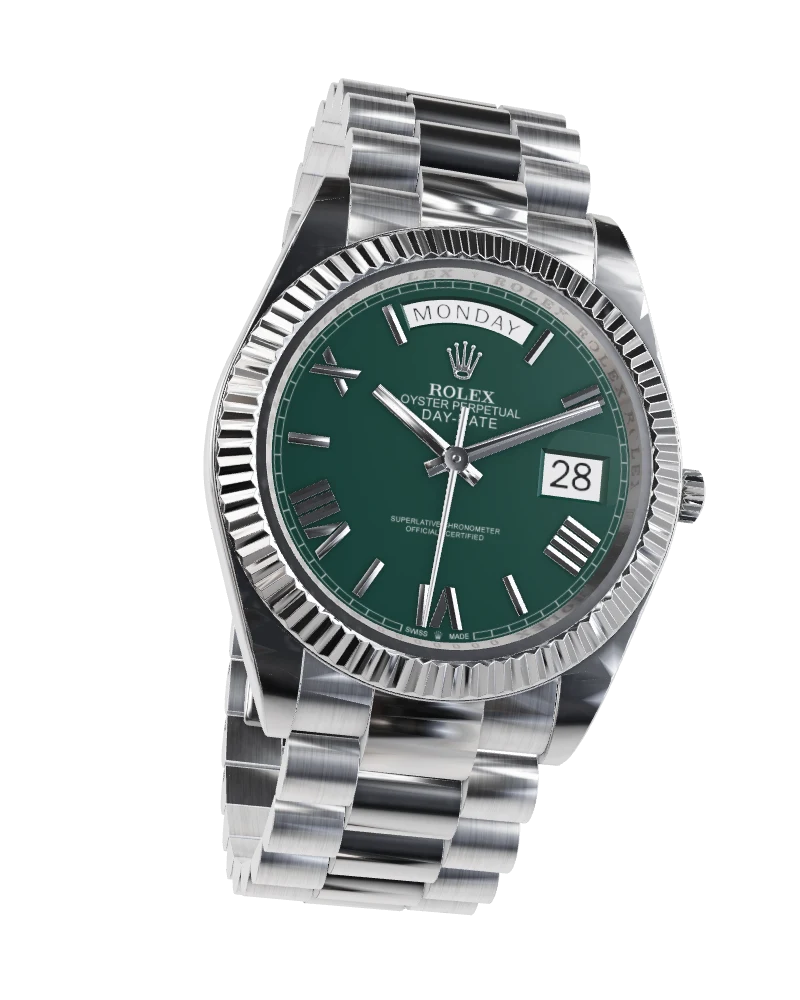
Illustrative 3D watch, not sale inventory.
Before you enquire.
Three things that make your first conversation useful.
Find your watch reference.
Start with the details that identify your watch.
Check the warranty card, receipt, service documents or original sales listing for a model or reference number. Marking locations vary by brand and reference. If you are unsure, send clear photographs of the dial, caseback, bracelet and clasp. Do not open the case or remove parts just to find a number.
Selling without box or papers.
Missing an item? Explain what you do have.
Box
Warranty card
Receipt
Service records
Spare links
The watch still needs an assessment of authenticity, condition and ownership. Missing documents can affect the purchase offer and the checks required.
Take useful watch photographs.
Clear, honest photographs help the first estimate.
Dial
Case sides
Caseback
Bracelet or strap
Clasp
Use soft daylight and a plain background. Show visible wear rather than hiding it. Photos support the initial discussion; they do not replace inspection.
Ready? The form takes a moment, and every field is optional.